





Three Strategies for Avoiding a Common Mistake in the Early Stages of Change
There’s a quiet truth we often overlook: before change brings opportunity, it brings discomfort.
When life is interrupted by an unexpected diagnosis, a job loss, or other curveball, we feel the ground shift beneath us. We scramble to regain some sense of stability, and our instinct might be to rush to action and restore normalcy. When the disruption is more subtle, like a persistent dissatisfaction in a relationship or job, we might be tempted to convince ourselves that it’s not that bad. We attempt to avoid discomfort instead of resolving it. This isn’t a reflection of a lack of resilience—it’s what it means to be human in the face of uncertainty.
But when we avoid discomfort, we miss the opportunity to learn from it. When we don’t listen to our emotions, we fail to hear what they are teaching us.
When I was burned out, I kept telling myself it would get better soon. And when I was newly diagnosed with cancer, everyone else kept telling me, “You’re strong, you’ll be fine.” I see the same tendencies for positive illusions and toxic positivity time and time again – in health, career, relationships, parenting, and more – in both my personal life and the experiences of my clients.
But true healing, true progress, only begins when we acknowledge what we’re carrying. The sadness. The frustration. The fear of not knowing what comes next.
These emotions aren’t weaknesses, they are data. They’re signals that something needs to be acknowledged. When we rush past them, we lose the opportunity to process the truth of our experience.
Instead, what if we paused?
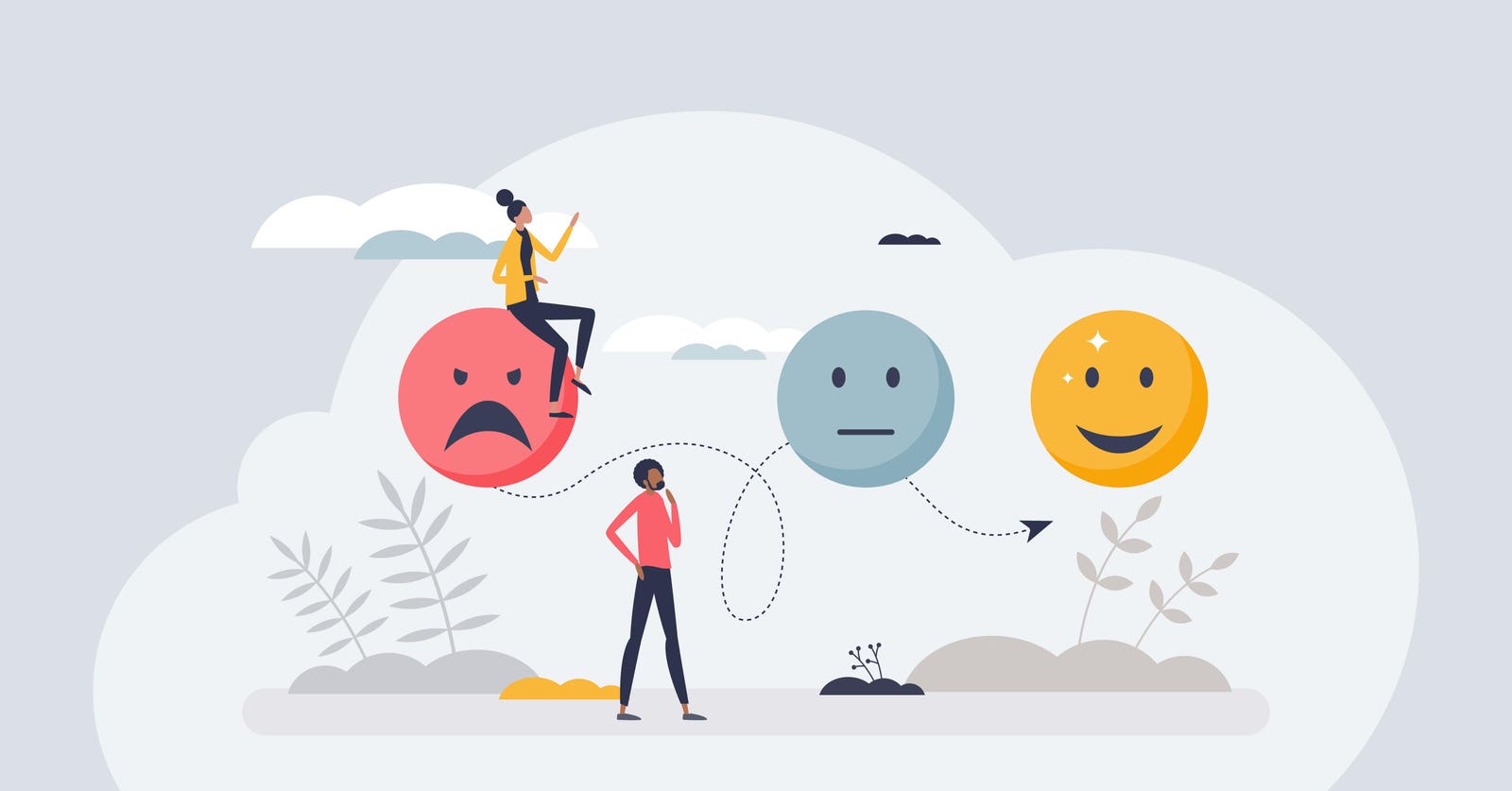
Consider conducting an “out-of-body” exercise to analyze and understand your emotions, observing yourself from the outside in. When doing so, here are three strategies for effectively navigating the uncomfortable, messy emotions in the earliest stages of change:
- Label your emotions: When we identify our emotions, we shift brain activity from the reactive emotional centers to the more thoughtful, deliberate parts of the brain. This small act of naming can start to soften the intensity and begin our mind’s shift from reactive to proactive. Use an emotions wheel like the one below, because the greater specificity with which we can label our emotions, the more data we will have about what we’re truly feeling and how best to respond.
- Separate the emotion from your identity: Instead of saying “I am anxious,” try “I’m noticing feelings of anxiety.” This shifts you from being the person experiencing the emotion to being the observer of it—a subtle but powerful distinction.
- Speak to yourself as you would a friend: What would you notice and what compassion would you offer? Sometimes that shift in perspective reveals wisdom we can’t access when we’re in the thick of it.
Whether you’re navigating a career pivot, managing a health crisis, or grappling with a relationship strain, the discomfort you feel is a doorway, not an obstacle. It’s how you begin to build clarity and resilience. But only if you make space for it.
If there’s one lesson I repeatedly return to, it’s this: we don’t find peace by avoiding our emotions. We find peace by honoring them.
Take 5 minutes to reflect: What is something you’re currently struggling with, and what specific emotions are you feeling? Take a moment to pause mindfully and conduct an out-of-body exercise; what do you observe, and what compassion can you offer yourself?
This is post #2 in a 12-part blog series inspired by the themes in my forthcoming book, The Path of Least Regret: Decide with Clarity. Move Forward with Confidence. Each article stands alone, but together, they guide readers through the emotional journey of change and decision-making and how to navigate it with my signature Path of Least Regret® framework. To read earlier posts, visit my Forbes contributor page.
Learn more about my upcoming book at parulsomani.com and sign up for launch updates to receive a free worksheet on “Five Questions to Guide Your Decision-Making.”
1. Matthew D. Lieberman et al., “Putting Feelings into Words: Affect Labeling Disrupts
Amygdala Activity in Response to Affective Stimuli,” Psychological Science 18, no. 5
(2007): 421–28.
Read the full article here