




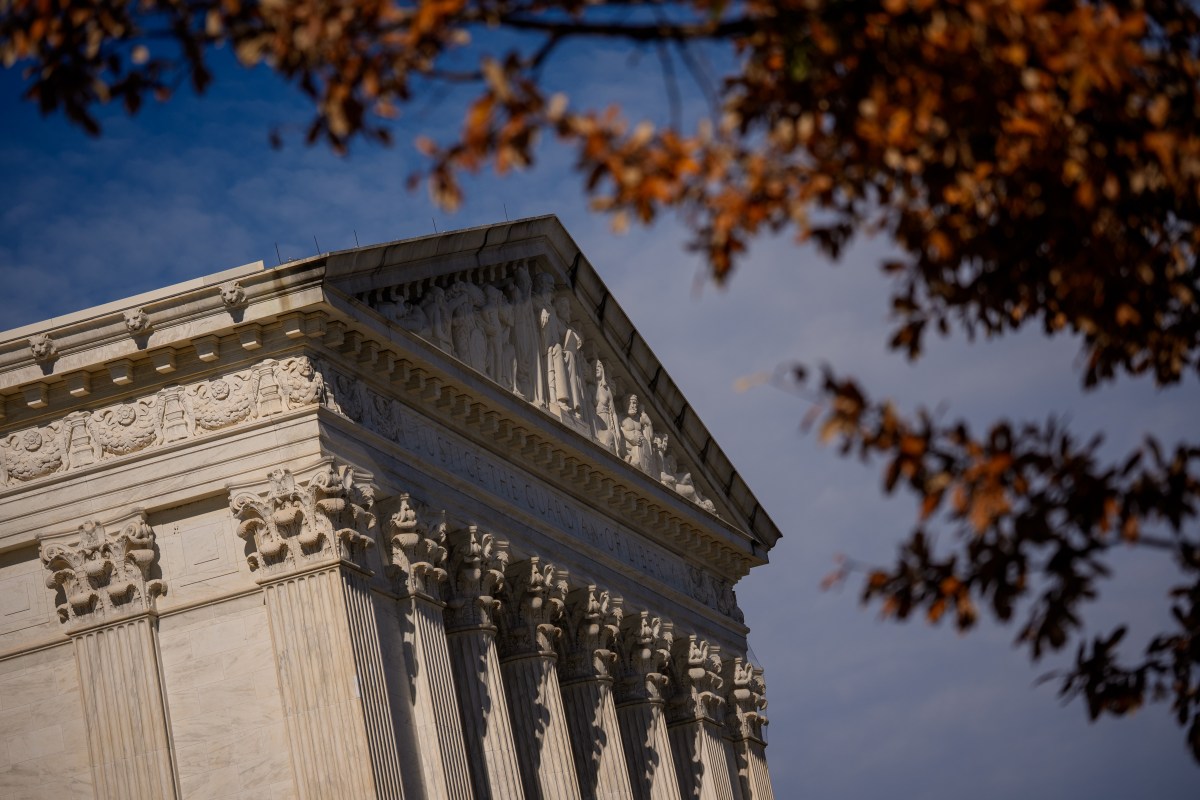
Legal scholar John Yoo, who previously clerked for conservative Justice Clarence Thomas, said Wednesday that the Supreme Court’s Tuesday decision against Donald Trump’s deployment of the national guard in Illinois had the “unintended consequence” of potentially pushing the president to deploy active duty military units instead.
“The unintended consequence here might be that the president is going to have to call the 82nd Airborne, or the Marines, or the 101st Airborne Division, as, for example, President Eisenhower did, after Brown v. Board of Education in the South to enforce desegregation,” Yoo, the Emanuel S. Heller Professor of Law at the University of California, Berkeley, said in an interview with Fox News.
“President Trump might have to do that first, in order to protect those federal buildings, those ice agents, and then, if they fail, he can then call out the National Guard,” he said.
Newsweek reached out to Illinois Governor J.B. Pritzker and Chicago’s Mayor Brandon Johnson for comment.
Why It Matters
Illinois Governor JB Pritzker and other Democratic leaders welcomed the Supreme Court’s Tuesday decision, as it at least temporarily prevented the Trump administration from deploying National Guard troops in the Chicago area. However, conservative justices floated the possibility of invoking the Insurrection Act as an alternative, and Yoo’s comments emphasize that Trump has additional options he could turn to.
What to Know
After weighing the decision for more than two months, the Supreme Court majority on Tuesday rejected an emergency request from the Trump administration seeking to overturn a lower-court ruling that blocked the troop deployment. U.S. District Judge April Perry had halted the move and a federal appeals court had declined to intervene.
“At this preliminary stage, the Government has failed to identify a source of authority that would allow the military to execute the laws in Illinois,” the court’s majority opinion said. Three conservative justices—Samuel Alito, Clarence Thomas and Neil Gorsuch—dissented from the decision, with Brett Kavanaugh concurring but writing separately to express some disagreements.
Yoo told Fox News that “the Supreme Court now says, ‘regular forces’ means you have to try with the regular armed forces first before you can bring out the National Guard.” He pointed to the possibility that Trump is now “going to have to call the 82nd Airborne, or the Marines, or the 101st Airborne Division.”
Later in the segment, Yoo described this as a “worrisome” development.
“The Supreme Court is essentially inviting President Trump to send regular armed troops and deploy those to Chicago and Los Angeles before he can send the National Guard. I think a governor would rather have National Guard troops than the 82nd Airborne and the Marine Corps patrolling the streets of Chicago,” he said.
What People Are Saying
White House spokesperson Abigail Jackson told Newsweek: “The president promised the American people he would work tirelessly to enforce our immigration laws and protect federal personnel from violent rioters. He activated the National Guard to protect federal law enforcement officers, and to ensure rioters did not destroy federal buildings and property. Nothing in today’s ruling detracts from that core agenda. The administration will continue working day in and day out to safeguard the American public.”
Illinois Governor JB Pritzker, a Democrat, in an X post after the Supreme Court decision: “Today is a big win for Illinois and American democracy. I am glad the Supreme Court has ruled that Donald Trump did not have the authority to deploy the federalized guard in Illinois.”
What Happens Next
The Supreme Court’s order is not a final ruling, but it could impact other lawsuits challenging Trump’s attempts to deploy the National Guard in other Democratic-led cities. It remains to be seen if Trump considers implementing the Insurrection Act, or other options, as an alternative.
Read the full article here