





Could guts save your butt?
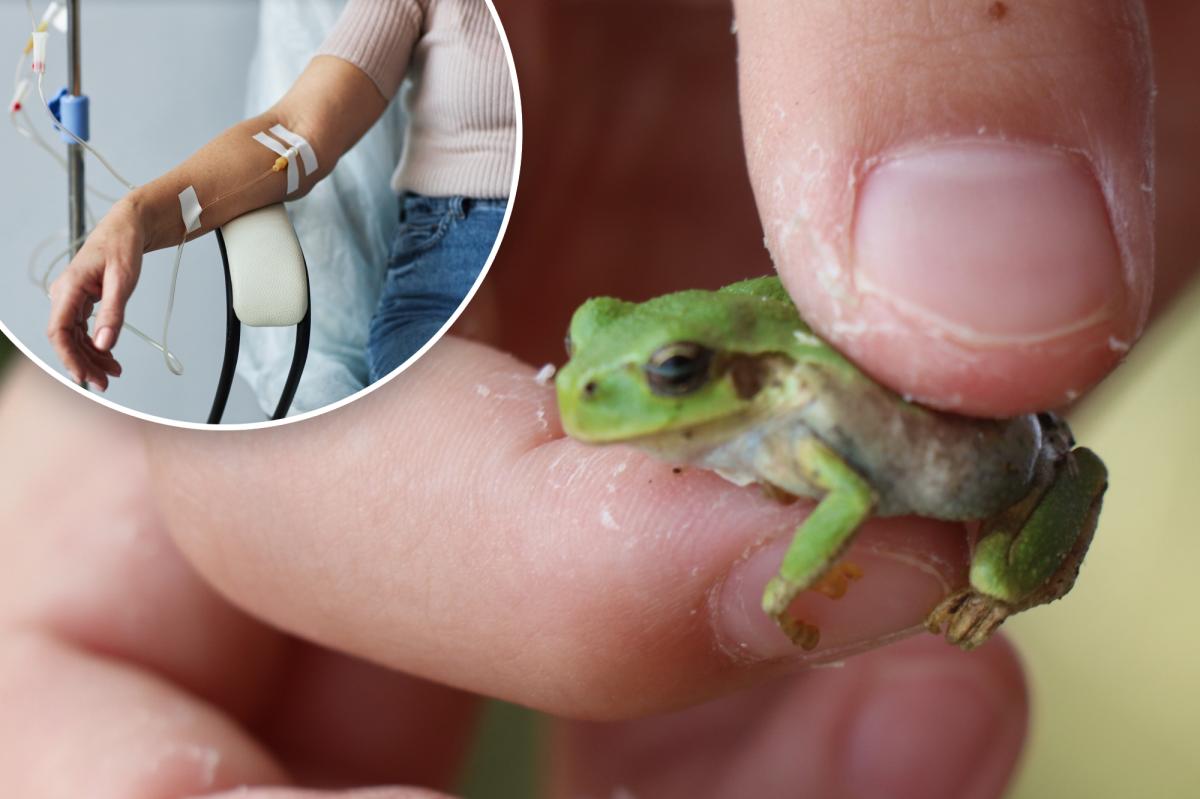
A new study reports that bacteria found in the intestines of Japanese tree frogs show remarkable promise in treating colorectal cancer.
A research team from the Japan Advanced Institute of Science and Technology (JAIST) discovered that the bacterium Ewingella americana could prove more effective than conventional treatments.
While the relationship between the gut microbiota and cancer has been extensively researched, methods thus far have focused on microbiome modulation or fecal microbiota transplantation.
However, in this latest study, published in the international journal Gut Microbes, the research team isolated, cultured and intravenously administered specific bacterial strains with the express purpose of attacking tumors.
Screening the intestines of Japanese tree frogs, Japanese fire belly newts and Japanese grass lizards, researchers identified and isolated nine bacterial strains with antitumor effects.
Of these, E. americana was found to be exceptionally effective.
Using mouse colorectal models, the team found that a single IV treatment with E. americana eliminated tumors, yielding a 100% complete response (CR) rate.
These impressive statistics far exceed that of standard cancer treatments, including immunotherapy and chemotherapy.
About 150,000 Americans are diagnosed annually with colorectal cancer, which occurs when cells in the colon or rectum grow out of control.
While colorectal cancer is traditionally linked to older adults, diagnoses among younger people have skyrocketed in recent years. A whopping 20% of cases in 2019 were in people younger than 55, up from 11% in 1995.
In response to the rise in younger cases, the US Preventive Services Task Force updated its colorectal cancer screening guidelines in 2021, lowering the recommended age to begin screening from 50 to 45 for adults at average risk.
The research team notes that the efficacy of E. americana is twofold: the bacteria directly destroy cancer cells and stimulate the immune system to induce apoptosis, the body’s system of eliminating damaged or cancerous cells, without causing inflammation.
Further, E. americana accumulates in tumor tissue without spreading to organs.
Unlike the side effects of chemotherapy, which can be devastating, E. americana has an excellent safety profile, according to researchers.
After 24 hours, the bacteria are undetectable in the bloodstream, and within 72 hours, the body’s inflammatory responses normalize.
“This research demonstrates that unexplored biodiversity represents a treasure trove for novel medical technology development and holds promise for providing new therapeutic options for patients with refractory cancers,” said the study authors.
The team notes that future research is needed and will focus on testing the bacteria’s efficacy in treating other types of cancer, including breast and pancreatic cancer.
Subsequent research will also center on developing safer and more effective methods for delivering the bacteria, including dose fractionation and direct injection into tumors.
In addition, researchers hope to determine if E. americana therapy can coexist with standard cancer treatments.
It couldn’t come at a better time. By 2030, early-onset colorectal cancer is expected to become the leading cancer-related cause of death for people aged 20 to 49 unless major intervention is taken.
Read the full article here