





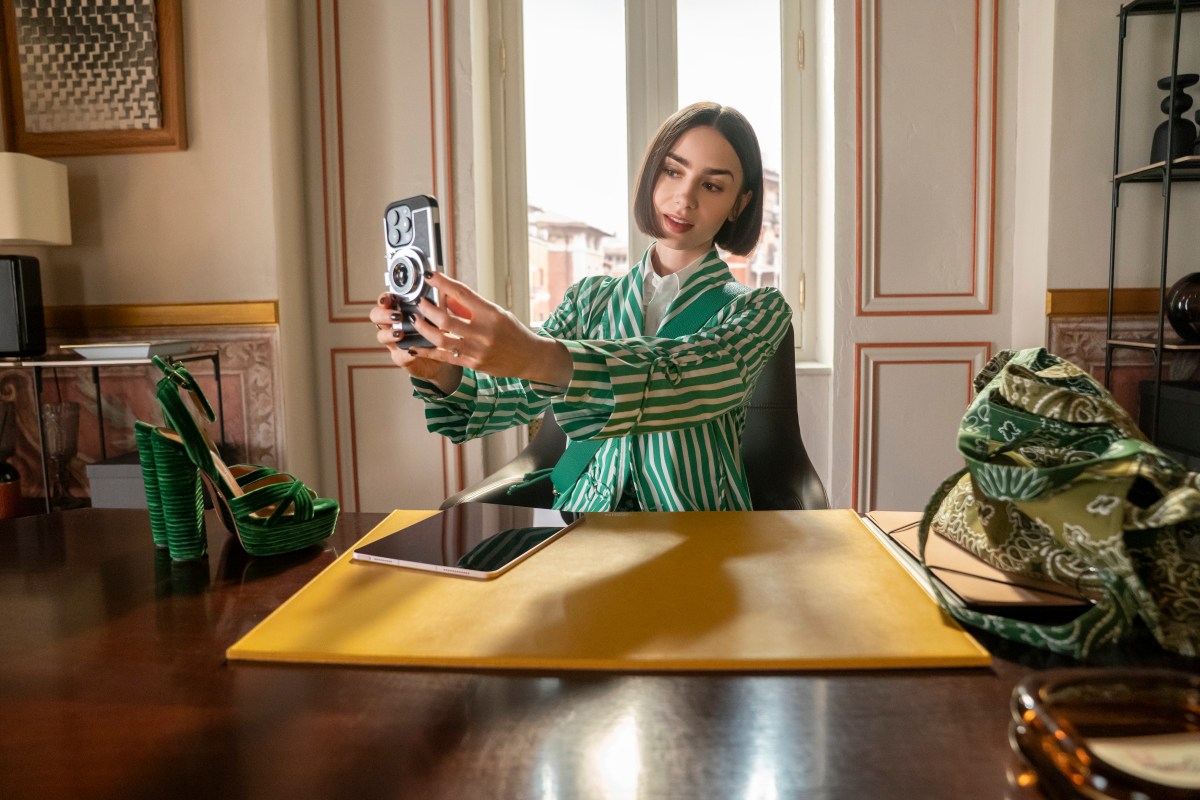
Everyone’s favorite second-screen watch is back.
Netflix’s Emily in Paris is returning for a fifth season on December 18, and while little is known about the plot, fans are ready to embrace another 10 episodes that track Emily’s glossy escapades around a romanticized form of Paris—and now Rome.
The show, fronted by British-American star and nepo baby Lily Collins—daughter of Phil Collins—is still a big deal. Collins’s enormous personal popularity, the flamboyant outfits and the show’s escapist appeal are still a huge draw, but it is just not as big a deal as it once was.
When season 4 dropped in 2024, several social-media users branded following seasons of the show unnecessary, calling its multiyear-long love triangle and low-stakes plot lines tired. Critical responses were also middling, with the show still getting “mixed or average” reviews on Metacritic.
Darren Star’s creation, which opened to 58 million households in the month after its 2020 debut, was viewed by just 19.9 million following season 4—still a streaming triumph, but a huge drop considering the history of the show.
Despite heavy marketing pushes by Netflix to keep its golden opportunity for advertising in favor among audiences, some fans are just less excited about the show than they used to be.
With its cultural relevance plummeting, can Emily in Paris recapture its magic?
Lucille Befort, a cultural entrepreneur and founder of the media company French Vibes Club, told Newsweek the show’s initial impact was specific to its cultural moment. She has been watching the show she describes as a “cultural fantasy” since day one, and, thanks to her large following, was once asked to be an extra in an episode.
“Its cultural dominance has naturally softened,” Belfort, who is based in Paris, France, said. “Emily in Paris emerged during the pandemic, when audiences were particularly receptive to escapist and visually comforting narratives.
“It also coincided with a peak moment in influencer culture.”
She added: “As media consumption habits and cultural expectations have evolved, so has the show’s place in the public conversation.”
Lori Bindig Yousman, a professor and expert in media literacy, told Newsweek that the show may have lost its novelty but retains potential.
“It’s not surprising that its novelty has worn off,” Yousman said. “That said, Emily in Paris has the potential to see resurgence in popularity.
“Setting season 5 in Italy once again returns the series to its ‘fish-out-of-water’ setup.”
Yousman said she also believes divisive current affairs may benefit the show.
“This politically fraught moment may result in audiences searching for comfort shows…Emily in Paris is reassuringly familiar while offering audiences a chance to escape,” Yousman added.
Befort, whose work centers on promoting French culture abroad, also sees a path forward if the show adapts.
“The series can remain culturally relevant if it continues to evolve,” she said. “Paris itself has not lost its appeal.
“However, contemporary audiences expect greater depth and self-awareness.”
Now known for being an escapist fantasy wrapped in haute couture, romance, and Instagram filters, Emily in Paris was once as controversial as it was popular—something that surprised many given Lily Collins’ squeaky-clean public image.
From its portrayal of a Ukrainian character that drew criticism from Ukraine’s minister of culture to scenes viewed as dismissive of Chinese culture, to outdated stereotypes about the French, the series was repeatedly called out for being offensive.
While these flare-ups kept the show in headlines, they also reflected shifting audience sensitivities. With season 5 poised to continue Emily’s story, and new romance with Marcello (Eugenio Franceschini) in Italy, the question now is whether the show can remain relevant without the cultural backlash that once sustained its visibility.
Salvador Ordorica, a cultural heritage advocate and CEO of a translation firm who lives part-time in Paris, told Newsweek the show’s lack of nuance hastened its fading appeal.
“The series skimmed the surface of cultural differences, often resorting to clichés rather than being nuanced,” Ordorica said. “It’s an approach that may have worked for a while, but eventually it becomes uncool and offensive, especially as our audience grows increasingly savvy about other cultures.
“Emily in Paris came during COVID—we all wanted to escape and be surrounded by beauty and fantasy. Influencer culture was hitting its stride, and the show tapped into that. Since then, audiences have changed. There’s more skepticism about influencers and a greater expectation for authenticity. Something that once felt aspirational now feels out of touch.”
Whether it can redeem its once-enviable viewing figures, the series has had a tangible impact on Paris’s global profile. A 2024 survey found that 38 percent of tourists cited the show as a reason for visiting the city, and France’s first lady Brigitte Macron even appeared in a cameo in season 4.
To this day, the Paris tourist office lists top filming locations on its website, and despite the show’s many criticisms, swathes of fans still wish they could live life as the idealistic Emily Cooper.
Read the full article here