





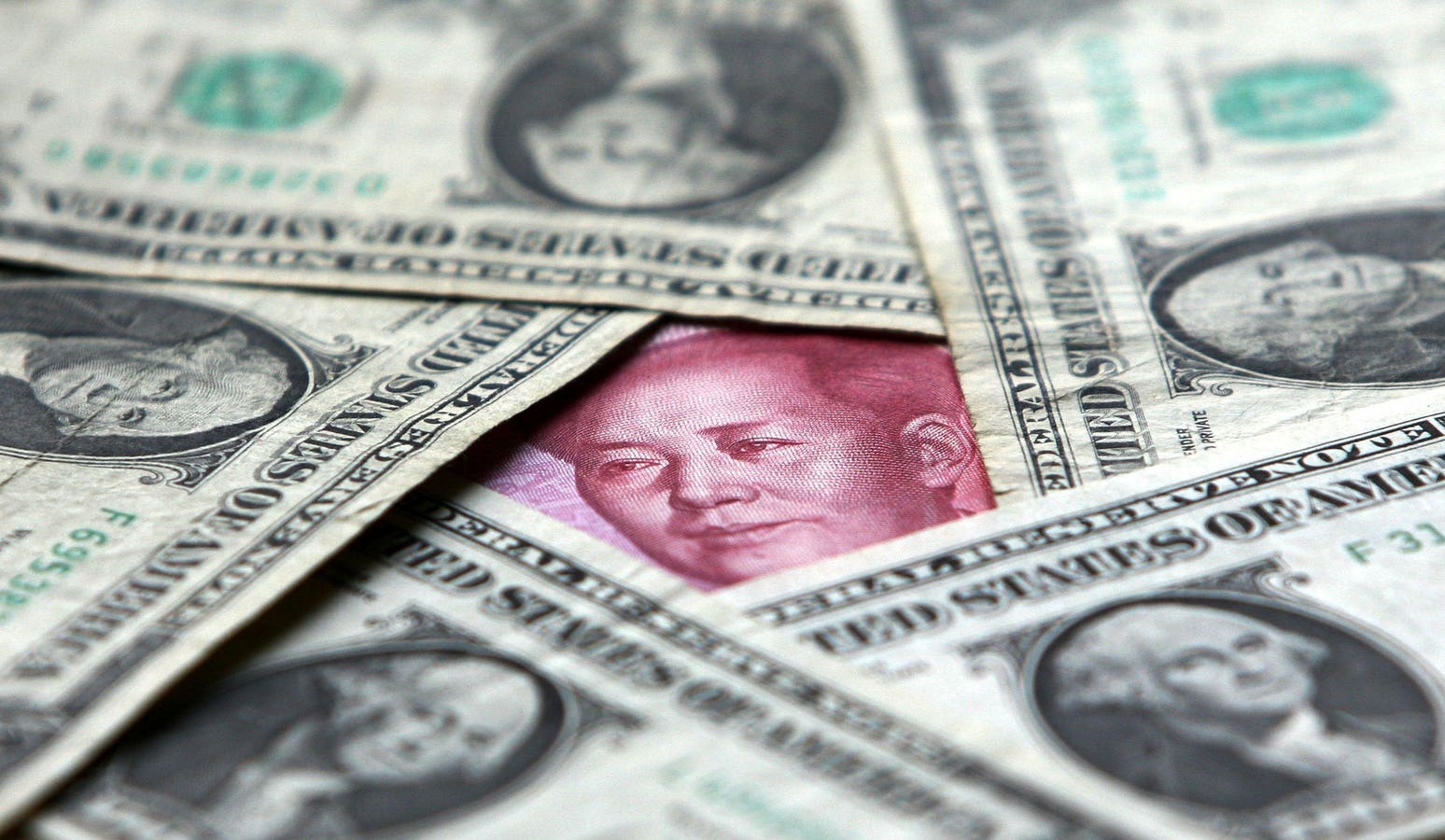
How should the West respond when China holds the purse strings?
Last week, China made headlines when it disclosed that its trade surplus hit a record $1 trillion in the first 11 months of 2025. Despite the Trump Administration’s tariff wall on Chinese goods, surging exports to Europe, South America, and Southeast Asia kept China’s factories humming.
All those export earnings must go somewhere.
A new report, Chasing China: Learning to Play by Beijing’s Global Lending Rules, issued by AIDDATA last month, shines a spotlight on China’s growing role as the banker to the world. The report, which combed through the records of over 30,000 projects, concluded that China’s overseas lending portfolio has reached $2.1 trillion as of 2023, more than twice previous estimates.
This makes China the world’s largest official creditor, supplying loans to projects in 179 out of the world’s 217 countries. China has become the creditor of “first – and last – resort” for developing countries, according to the authors, and has rewritten the playbook for development finance established by the IMF, the World Bank, and other pillars of the post-war order. Rather than offering below-market loans to advance the welfare of low-income populations, China is portrayed as a sharp-elbowed operator that tightly ties its financial firepower to its own economic and strategic objectives.
The report argues that Western nations are now scrambling to remain relevant and to adapt to the model China has established. What are the factors that make China’s state-led overseas financing distinctive?
Strong Profit Orientation
Commerce trumps charity when China doles out capital.
China’s official development aid, or ODA, has dropped to its lowest level in two decades — just $1.9 billion in 2023 — even as its lending portfolio has burgeoned. The report argues that recent moves by the United States and European countries to reduce funding of foreign aid, may be influenced by the Chinese example.
China has a reputation for funding major development projects in the Global South, including resource-rich countries in Africa and South America. However, the report found that funding for developing countries fell from 88% of the total in 2000 to just 24% in 2023. In 2023, 76% of its new loans were made to higher-income nations, which have reduced repayment risk, stronger credit profiles, and valuable brands and technologies.
The single largest recipient of funding from China’s state-controlled banks has been, surprisingly, the United States.
Chinese loans have helped to finance LNG projects in Texas and Louisiana, oil and gas pipelines crisscrossing America, data centers in Northern Virginia, and new terminals at JFK Airport in New York and Los Angeles International Airport in California. While some of China’s investments in the U.S. have enabled Chinese companies to acquire critical technologies or brands, “many of China’s lending operations in the United States are guided by the pursuit of profit rather than the pursuit of geopolitical or geoeconomic advantage,” the report says.
When extending loans to developing countries, China’s state-owned banks finance infrastructure built by state-owned Chinese companies and double-collateralized to ensure repayment.
Whereas Western institutions traditionally required open bidding on development projects, “Beijing has also blended the use of concessional and commercial financing to help its firms gain a competitive advantage,” according to the report. These projects helped open new markets and establish China as an industrial and infrastructure superpower.
Arm of Industrial Policy
In addition to profits, these massive loans are a tool to advance strategic industries.
An earlier wave of lending was centered around China’s “Belt and Road Initiative” to secure trade routes through an ambitious network of ports, railways, roads, and other major infrastructure projects. But the report found that recently, BRI-related lending has dropped to less than 25% of its loan portfolio.
Instead, the “Made in China 2025” policy, aimed at achieving self-sufficiency in a range of advanced technologies, has been the driving force behind a surge of debt-fueled acquisitions. The report suggests that since the policy’s adoption, China’s lending to finance acquisitions in sectors designated as “sensitive” from a national security perspective surged from 46% to 88% of the portfolio. This includes deals to gain control of companies in industries including semiconductors, robotics, biotechnology, quantum computing, and defense technologies.
The West Reacts
As the full impact of China’s financing activity has become apparent, Western developed nations are being forced to rewrite the rules of both development aid and international finance to be oriented toward raw national interest, rather than altruistic goals.
For example, the Trump Administration has proposed repurposing foreign aid spending to create an “America First Opportunity Fund” that would invest billions of dollars to secure rare-earth deposits in Greenland and the Ukraine, counter China’s interests, and reduce immigration to the U.S.
The U.S. launched the International Development Finance Corporation in 2019 as a response to China’s Belt and Road Initiative, and it has since financed projects ranging from mines in Brazil to railways in Angola and the Democratic Republic of Congo, and data centers in Africa. As part of the reauthorization this year, the Administration has proposed making it easier for the DFC to take equity stakes in growth-stage companies tied to national security, finance projects in higher-income countries, and even invest in U.S.-related projects related to supply chains and infrastructure.
Europe is now carefully scrutinizing technology-sector acquisitions. The Dutch government took control of the semiconductor company Nexperia in September, citing concerns that its Chinese financial backer, Wingtech, was seeking to transfer its key technology to China. This move led China to temporarily restrict chip shipments to European automotive manufacturers in retaliation.
“The international regime that governs aid and credit is undergoing a period of contestation and reinvention,” according to the authors. “Beijing has dislodged the status quo, forcing its competitors to fundamentally rethink the purposes, the recipients, and the instruments of international aid and credit.”
It is unlikely that the United States will be successful simply by copying China’s playbook for development financing. The U.S. government does not control our banking system. We are not piling up large trade surpluses. In fact, our trade deficits have continued to grow in 2025, although showing some improvement in September. And we lack the massive industrial planning capacity of the Chinese state, whose economic ministries work off detailed 5-year plans.
The U.S. is more likely to find success if targeted government financing stimulates the capacity of our private sector. One encouraging sign is that VC investment in defense and national security is booming, with $28 billion of capital going into defense tech startups in the first nine months of 2025. And in October, J.P. Morgan announced a goal of committing $1.5 trillion of financing to American “security and resiliency” across supply chain, defense, energy, and frontier technology sectors.
In the worst case, the new era of development finance could lead to cronyism that enriches connected insiders and advances partisan causes while leaving taxpayers on the hook for bad investments. In the best case, government support stimulates American innovation and the capital market’s capacity not merely to copy but to leapfrog into new industries, new technologies, and new opportunities not yet on the roadmap of our competitors.
Read the full article here